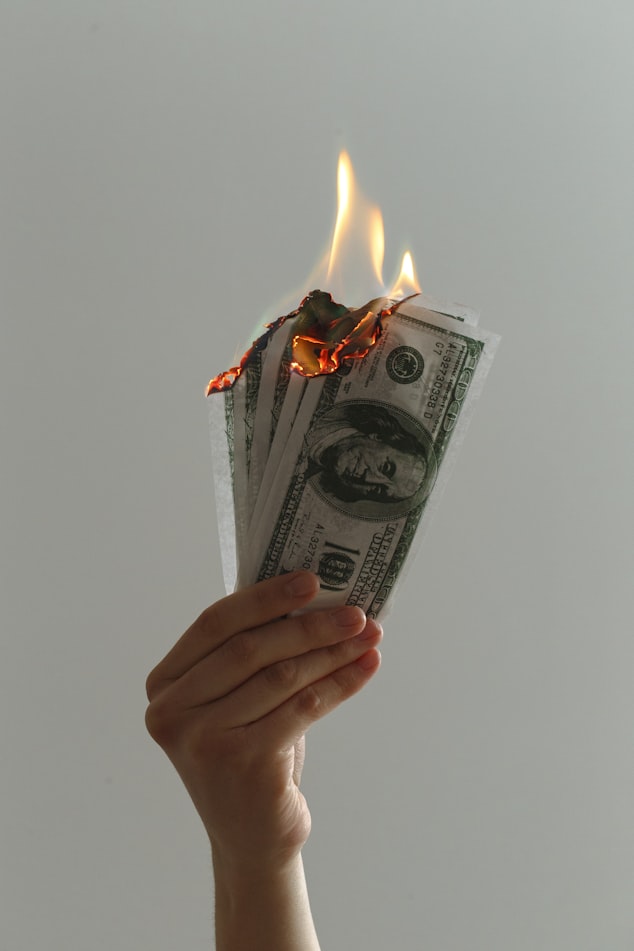
Twitter, facebook, all of social media, they give us the ability to create microblogs that are both easy to create and to consume, much easier than most other forms of media. They are content providers without actually creating any content! They are media sources without actually paying any of their reporters! Put another way: social media leeches our creativity. It does so with such subtlety that we don’t even notice. This is to say nothing of the time spent, opportunity cost, privacy invasion, and numerous other negative impacts.
Half-baked thoughts are “published” before they have been thought out, vetted, or researched. What could have been a short story, an essay, an op-ed, or even a book became stream of consciousness idea just sent off into the web. Things that could spark real thought and intellectual discourse are lost in the sea of vitriolic regurgitation of talking points that describe most internet arguments.
I am reminded of some trending hashtag on twitter. Something along the lines of “something new generations will never understand.” Sadly I can’t remember where I saw it, maybe the hive mind here can help me give credit, but someone posted that kids today will never understand “having an unexpressed thought.” That one resonated with me. Ever since then I’ve tried to be more liberal with the use of the back button, backspace, discard, and delete.
There are advantages to be sure. And there are costs as well. But let’s be clear on that point: social media platforms are not free services. They take from us our time and ideas, exploit our emotion, our laziness, our ego, our id, and a host of other parts of us.
We would benefit from less posting, less scrolling, and more creating.
Always remember, the authority that you give to one President will be used (and stretched) by the next President. Give power to a President that you like, and you’re also giving it to the one that you’ll hate.
A large portion of our current frustration is because generations of Congresses have been abdicating their responsibilities so that they can focus on reelection. They let the sitting President do the controversial things and take all the heat so that they can point fingers no matter what happens. Vote wisely in state/local/midterm elections with this also in mind.
This highlights the need for state/local powers to minimize the many downfalls of an overly powerful Executive (and bloated federal government in general)… but history also tells us that we need federal powers as well (as an example, states passing discriminatory laws need to be checked). A functioning federalist government can be a wonderful thing.
It is really dramatic to have lived to see how drastically and quickly public support changed on these topics. I’m sure other topics would fit here too but these come to my mind first. Not long ago people wrote & protested on these subjects and were shouted down. Now, gay marriage is the law, upheld by the Supreme Court. Dan Snyder has officially announced a name change for the football team (after having previously said it will never happen “Never. You can use caps.”). Even NASCAR and Mississippi have removed Confederate flags. And there are protests throughout the world advocating for racial equality and legislation has already been passed in some cities aimed at addressing some of the problems brought up by BLM. Businesses having previously distanced themselves from Colin Kaepernick are now being pressured to support his causes and admit they were wrong.
I find myself often reminded of people talking about how we should take care to make sure we wind up the right side of history. Make no mistake, we are living in it.
Some people see these changes and lament the changing culture. Others think of the MLK Jr. quote “the arc of the moral universe is long and it bends towards justice.”
For some reason the unroll bot Thread Reader is not working on twitter, so I compiled this thread to make it easier for people to read/share. Here is the original thread:
THREAD – History doesn't repeat itself, but it rhymes: a thread about the **Anti-Mask League** of 1919.
I'm not kidding I went HAM researching this
So, starting in Sept 2018 San Francisco suffered from Spanish Flu pandemic.
So, starting in Sept 2018 San Francisco suffered from Spanish Flu pandemic. Initial mask wearing was good — around 80 percent. By November cases were down, and public health officials recommended re-opening the city. Residents rushed to entertainment venues after having been denied this communal joy for months. The Mayor himself was fined by his own police chief after going to a show without a mask. But a second wave surged in Dec 1918, and SF’s Health Officer again urged people to wear masks voluntarily
Left to their own devices, most citizens – by one count 90 % – refused to wear masks. Businesses, concerned about Christmas sales, opposed. So did Culinary Workers union. San Francisco residents were fed up. This was the second wave of the pandemic, and they had already spent months between Sept and Nov being hassled, fined and even arrested for not having a mask on. Challenges of constitutionality were heard. Christian Scientists objected, arguing that it was “subversive of personal liberty and constitutional rights.” Civil libertarians argued that if health officials could force them to wear masks, then it could force them to inoculate “or any experiment or indignity.” The San Francisco Chronicle turned against the notion of mandatory masks.
Was the death rate high enough to justify remasking?
Wasn’t this just the return of normal seasonal colds?
How much was this due to a public ‘scare’ and hype?
An op-ed ran in the local paper w/headline ‘What’s The Use?’ after a man got sick despite following public health guidelines. A promised vaccine turned out to be bogus 100s of citizens congregated on Dec 16 to debate a masking order. On Dec. 18 someone had sent what appeared to be an improvised explosive device to San Francisco’s public health official signed, ‘Compliments from John.’ (!!!)
The story via historian Alfred W. Crosby:
San Francisco’s Public Health Officer stuck by his guns, refusing to back down, and saying there was evidence that masks helped!
He implored the public to look to the data! Wear masks! They help!
But the public declined to listen to SF’s Public Health Officer. On Dec 19, officials voted down a mandatory mask order. “The dollar sign is exalted above the health sign,” sighed the public health officer. By far the worst day of flu/pneumonia deaths followed on Dec 30. Flu got worse in San Francisco when masking was voluntary.
A representative of organized labor relented: “It is of no time to quibble over the worth of the mask. It is the best thing we have found to date, and if you have anything better, for God’s sake, give it to us.” So on Jan 10, 1919 local officials voted to approve a new mandatory mask order after 600 new cases were reported that day. Citizens were arrested/fined for not having masks on, but widespread disobedience of the order continue & large numbers of citizens refused to wear masks.
Protests continued:
Over 2,000 people attended an event formed by San Franciscans called themselves ‘THE ANTI-MASK LEAGUE,’ denouncing the mandatory masking ordinance. The gathering was of “public spirited citizens, skeptical physicians and fanatics,” writes historian Crosby. Moderates in the Anti-Mask League wanted to circulate an anti-mask petition. Extremists wanted to initiate recall proceedings of SF’s Public Health Officer. Chaos broke out until someone shouted, “I rented this hall and now I’m going to turn out the lights.” (Mak note: lol)
The San Francisco Public Health Officer was a man named Dr. William C. Hassler. Think of him as the 1919 Dr. Fauci. Ignored by those who didn’t want to believe the data, threatened with violence, Hassler was conscientious and performed his job with distinction.
I haven’t read anything about how many people became sick DUE to the Anti-Mask League event, where 1000s gathered to protest without masks. So we may not know how many people, if any, became sick due to this congregation but safe to say it was not helpful during pandemic. On Jan 17, the day the masking ordinance went into effect, the # of new cases/deaths declined, the first decline in quite some time. This continued until the epidemic faded, a signal that the mask ordinance had helped wipe out the Spanish Flu in San Francisco. Of course, the SF Public Health Officer — the 1919 version of Dr. Fauci, got no credit for the decline in influenza cases. People continued to gripe about the masking even after the pandemic had been stalled by it. No one seemed to credit masking for the success of blunting the Spanish Flu in San Francisco — because, well, the crisis faded due to its success. “Rarely has the evidence in support of a scientific hypothesis been more overwhelming and more deceiving,” writes historian Crosby.
Ultimately San Francisco was one of the American cities hardest hit by the Spanish Flu. 673 per 100,000 people died during the pandemic due to influenza and pneumonia, per U of Michigan. 50K cases total and 3,500 were killed, per Crosby.
PHOTO: Masks being worn by players during a baseball game, in newspaper Mar 1, 1919 via The Independent
The 1918/1919 protests against mask wearing and other public health measures have parallels to today. We learn through this episode that various groups of Americans have been pushing back against public health measures for more than a hundred years — and for similar reasons!! In learning about the Anti-Mask League of 1919, we see many of the same human elements as today: a portion of the population resistant to the measures; a business community crying out for relief; a second wave after an initial loosening; threats to public health officials. This is essentially a report that I pieced together by reading sources after getting curious about the 1919 Anti-Mask League. Any mistakes are my own.
I started by drafting a few tweets and then spent an hour and a half researching it last night. One thing led to another…
SOURCES:
The University of Michigan’s Influenza Encyclopedia The San Francisco Chronicle’s archives America’s Forgotten Pandemic: The Influenza of 1918 by Alfred W. Crosby American Pandemic by Nancy Bristow
Why must we always jump to an extreme position? And why do we then assume that anyone who disagrees is the other extreme?
Little by little the news of Covid-19 hits closer and closer to home. First it was spreading quickly but not here. Then there were rumors, then reports of infections, and now infections and one fatality. The news does what the news always does- it creates headlines that we can’t look away from. Sometimes it’s overwhelming, but it is our job to strip away the sensationalism and find the real, factual report. In doing so it seems like everywhere we look we see either a looming apocalypse or “nothing to see here.” People are either waiting in lines at warehouse stores for all their last minute prepping needs or they are rolling their eyes. And this is to say nothing of the conspiracy theories that spin off.
People are free to respond however they want, but if it’s not posted on social media, does it really happen? Everyone feels the need to offer advice to each other, to tell people how they are supposed to feel, to free as many people as possible from the fake news that they’ve fallen for. So the preppers prep and continue to report the ever tightening reports of infections and fatalities. And the “nothing to see here’s” make sure to tell everyone that they are over reacting and that the flu is much worse insert up to date flu fatalities vs Covid-19 fatalities information here.
But isn’t the flu only much worse because it’s much more widespread? According to reports as of the date of this publishing, the mortality rate is much higher for Covid-19 than it is for the influenza. If Covid-19 becomes as widespread as the flu, it would mean many more global deaths, therein lies the concern.
Why have we lost the ability to have measured, nuanced conversations? It seems reasonable to warn people about the risks of this new and spreading virus, to warn people about why the higher mortality rate is so concerning, but at the same time not trigger a mass panic due to exaggerated discourse.
And why do I feel like this is my response to pretty much every single news story? Both can be true, if they would just dial down the rhetoric a little bit.
But what a post be without some unsolicited advice? It’s a lot more fun to follow the news and replace “Covid-19” with “zombie virus” and imagine yourself as the main character in a Walking Dead spin off, sitting in the US watching the reports get closer and closer.
Someone pointed out the dramatic difference in voting records for different branches of Christians and I can’t unsee it. It is widely documented that white Evangelicals vote overwhelmingly Republican while similarly charismatic Christians that are black vote overwhelmingly Democrat. We could go down a rabbit hole if we started to list more and more Christian groups and their voting habits but this is meant as an example and not the real topic at hand: exclusion, whether it be by separating ones self or by considering a person or group “other.”
I have seen writing and even experienced it first hand that among Evangelicals and similar groups, when people step outside of certain accepted beliefs they are simply written off as being deceived. Maybe deceived by the media, or by spiritual forces, or other bad & misguided influences in their life- but deceived none the less. There is no possibility that the criticism is warranted; there is a right way to see things and any deviation leaves one outside of our group.
It seems like it should be odd to say that the same thing exists in politics too, but this is an accepted phenomena in American life. When one deviates from specific items on a platform they can be shunned. For many, there is no “big tent where many views are welcome.” This can be seen when pro-life feminists are told they aren’t welcome at feminist events, it can be when Jewish activists are told not to demonstrate with Jewish related symbols because it might be offensive. But it is especially noticeable in how Donald Trump’s Republican party seems to keep pruning itself of life long Republicans who speak out. We hear accusations of FAKE NEWS! and a media-wide liberal agenda, but what about the life long Republicans that exist on these many media outlets? David Frum, Peter Wehner, David French, and many more- they spent years working in Republican administrations, writing for conservative and Christian outlets, and advocating for conservatism. They can be found in mainstream media sources like The New York Times, Time, C-SPAN, The Atlantic, and many more outlets but the outlets are considered liberal, and now the authors aren’t even considered “true” conservatives because they stand against Donald Trump.
We can now add Mitt Romney to the list. A Republican presidential nominee not long ago. A man whose faith and integrity have rarely been questioned, but to vote against Trump invites Republicans by the thousands to dismiss him, exclude him, and even vilify him.
The purpose of this article is not to vilify Christians or Republicans, the purpose to highlight the No True Scotsman fallacy when we see it. People can be conservative and vote against Republicans, people can be Christians and vote for a pro-Choice candidate. And there are plenty more examples that I’m sure we could list. Don’t fall in to the fallacy, look to learn from people with a different point of view.
Adam Frank is an exceptional science communicator. In a conversation with Joe Rogan (episode #1130) and in other platforms he uses the analogy that scientific studies are like spitballs. At first it didn’t make any sense but as he explained it not only did his metaphor become clear, I had to pause the episode to really think through the impact that this idea would have in changing my entire world view.
Many of us can relate to this experience at one time or another (or every day!). We hear something interesting and it rocks our world view, we immediately need to share it! Why can’t everyone else see it? Why doesn’t the established community change their stance?! There must be a conspiracy! There is some truth to the idea that people and communities in general get entrenched in their ideas. Many times it is because they are comfortable or for many people in a field they have seen so many theories come and go, that they default to dismissal. This last point is the key here, there is momentum at play. So many ideas have come and go, time is the test. Repeatability is the key and this cannot be overstated. One test with surprising results may pique some interest among the fringe, the media, and maybe even some people trying to make a name for themselves within the community. If the experiment can be repeated, if enough evidence can be compiled, bit by painstaking bit you might find some acceptance.
I see this in health news all the time, when there seems to be a new story every week of an every day item increasing cancer risk or a new way to optimize your health or weight loss. We see it in reports that coffee might be bad for you, or it might not. Vitamins might be useless, or maybe they aren’t. And we see it in our dialogue about climate change, reports of cooling in the 70’s and warming now. Look at the methods in the studies. Look for other studies that tried to find the same thing.
Frank compares this work to shooting a spitball onto the side of a ship. One spitball means nothing. It isn’t noticeable. But get enough spitballs stuck to the same side of the same ship and eventually it can make a difference. Always look for more evidence, not just the outlier.
With Presidential Candidate Andrew Yang in the news bringing Universal Basic Income more into the public sphere, we are reminded just how difficult it can sometimes be to get ahead. There are statistics that show quite a dismal view of how many people are able to afford a financial emergency and of how many people live paycheck to paycheck or close to it. We’d like to see struggling people do things to lift themselves out of poverty but sometimes we don’t really think about just how hard it is to get real momentum going in that direction. The context here from AndrewYang and from scottsantens is that with a small extra income each month it can help people to be able to take care a lot of things that can go a long towards improving our health, our quality of life, and even a long term lift out of poverty. With that said, we started a list with the following tweet:
Being poor is expensive, let's make a list.
-Can't buy in bulk -No membership to clubs that offer savings -Less insurance coverage -One unexpected emergency expense leads to late fees &/or interest -Organic milk lasts longer but more $ -Tires w/ longer tread life https://t.co/spMwJw2JaF
The list keeps growing even as I post this, so the commentary below is just a few of the highlights, feel free to join the discussion on twitter by commenting on the post linked above (or by commenting below).
Having to pay car insurance on a monthly direct debit which often adds over 10% to total cost of car insurance
@kieronsrees above leads to thoughts about all kinds of payment issues. You get a discount for paying certain bills all in one payment instead of monthly. Similarly: -Paying up front ensures you can buy things without paying interest -A lot of companies offer discounts if you put your payments on autopay, but when you’re living paycheck to paycheck autopay doesn’t always work because you worry about a payment being pulled the day before a certain deposit clears, then you get overdraft fees (this has happened to me).
-Deferring routine car maintenance can lead to much more expensive repairs or breakdowns which can lead to –missed work time –being stranded on the roadside in dangerous/hot situations –towing fees & penalties –Loss of the car
This one, from @paprikapink, is huge. Can’t afford to fix the car, can’t afford not to.
-Not being able to buy products that are higher quality that will last and are more sustainable and environmentally friendly, but spending more long term on cheaply made products. -paying more money from interest over time because you dont have enough currently to pay debt off
— hellsea//chelsea wilkinson 🧢 (@hellseathinks) August 2, 2019
Above, from @hellseathinks, is another one that hits close to home for me. I’d like to buy less from places that don’t guarantee good work conditions, fair pay, and sustainable practices. For me that meant trying to buy American products as often as possible- but they are more expensive.
As we went through this list it also got me thinking about how people might want to move for any host of reasons. Maybe they want to be closer to family and a support network (free babysitting while they work!), maybe they are unhappy with their state’s drug or abortion laws, or maybe they’d like to a state with no income tax. The problem is, even moving for a job opportunity is difficult because moving is expensive!
There are many people who aren’t spending their money frivelously, they are counting every penny, tracking their bank accounts meticulously, they are barely keeping their head above water and just a little bit extra, any break, could make a huge difference in quality of life & mental health.
In the uproar about student debt we often hear people say things like “Well, they shouldn’t have taken out 50k+ in debt for a degree that isn’t marketable!” But lost in this argument are a few factors that seem to play a very important role.
First, we must consider the cultural narrative at the time. For generations people used education and home buying as THE go-to methods of upward mobility. Many GenX and early Millennials were raised on the idea that that’s what you do- you go to college because it puts you in a better demographic, the degree makes you more marketable. Many of these same kids were told their entire lives to pursue what you’re passionate about so that you never have to work a day in your life. Their parents and/or grandparents had been grinding for decades and they wanted better for their kids.
Not to get too far off topic, but you can see the power of this cultural narrative in how popular those Adjustable Rate Mortgages (ARM) were that contributed to the housing crisis. So many people were making money on their houses. They were taking out their equity and using the money to increase their quality of life, people were flipping houses and making a profit, getting their real estate license and making money-finding any job in the real estate market was like learning how to print money. “Home values always go up!” people said. “Even though you many not be able to scrape together enough money to put 20% down, or afford the full payment now, if just get yourself into the home with an interest only loan, the value of the home will pay you back later. You can always refinance when the home value goes up, and it always does.” But when the bill came due before the value went up, people weren’t ready. The music stopped and there just wasn’t enough chairs. In hindsight this is all obvious, don’t buy a house that you can’t afford! But at the time, the cultural narrative was strong, and nobody likes to see so many of their peers making money in a market and feel like they are the ones getting left behind, being foolish for being so conservative and cautious, letting everyone else reap the rewards for an obvious way to advance your financial situation.
So people see ways to accumulate wealth all around them, especially in an internet and social media era when it’s so easy to see every single way that people find to make money. Go to school, get a good job, buy a house. Here’s where tuition comes in. For families who could afford it, the parents or grandparents pay for school, and the kid graduates with a degree (and the accompanying connections) and it’s off to the races. For some students they maybe even got need-based scholarships. But there is a large group of kids who were taught that college was the way to move advance their social status. Their parents couldn’t afford to put them through school, maybe the parents didn’t go to college themselves, but things would be better if you just make it happen- whatever it takes. Take the loans, it’s good debt, it’s tax deductible, you are investing in yourself because when you graduate instead of starting your career at 25k/year you can apply for jobs that start at 40k that require a degree.
Then the market changed. The internet bubble burst in 2001 and the housing recession in 2008. And automation. The rug got pulled out.
For many of these kids they have followed the rules their entire lives: they did well in school, they did what their parents and teachers have told them to do for their entire lives, and now we want to blame them for having the gall to go to college and not becoming an engineer or an accountant. To make this large scale judgement is to ignore the large scale narrative that college was the answer, by any means necessary.
I had been thinking about this topic for a while but credit to this WSJ article for inspiring me to finally put my thoughts down.
Not only was it news to me that many hard liquors are low calorie, sugar free, and carb free, it was news to me that you could drink while on a Ketogenic diet. In my research I read in many places that while the alcohol being processed in your liver may inhibit fat burning while it’s processing, it’s not necessarily a major no-no if you’re trying to stay on the Keto diet but also have a few drinks at the party.
The problem of course, is the mixers. Most people don’t like to drink their liquor straight. My wife and I fit in this camp and so it was here that we decided to try to find a vodka that was smooth enough to drink over ice or maybe with some plain soda water and a lime. Why vodka? It probably stemmed from the idea that in tasting vodkas we would just be looking for the smoothest, easiest to drink- a simple rating. If we wanted to try whiskeys, Tequilas, or something else, we would need to then discover if our distaste for the spirit was related to the quality/taste, the aging, barrels, or various other flavors of each particular spirit. With vodka there seem to be a lot less variables.
I scoured the internet looking for lists of best vodkas that were also not crazy expensive.
The most obvious answer from almost everyone’s list was Tito’s and on my first trip to the liquor store they were having a sale, so that was our first test. I’ll admit, however, considering that it was everyone’s choice for best budget vodka, it’s a bit more expensive than I had been hoping for. Not as expensive as Grey Goose, so there’s that, but it’s not what I’d call a budget vodka either.
I offer the following notes as nothing more than a few details on our experience. I do not pretend to be an expert or to have a refined palate, quite the opposite. I just wanted to offer some notes for anyone else who might be on a similar journey. I will keep updating this as we try new brands and do more blind taste tests.
Tito’s: Everyone’s favorite “budget vodka.” Except that it’s the top shelf option at some places. Anyway, it was fine. We drank it. Drank it on the rocks with lime and with soda water. It was drinkable. We have had worse. But it left me thinking “Welp, it’s vodka, what did I expect?” Not a ringing endorsement.
Pinnacle: Not too bad, actually. Probably half the price of Tito’s and I’d say not really any worse. For our tastes, this was our leader at first. We did a blind taste test between Tito’s and Pinnacle and preferred Pinnacle.
New Amsterdam: It was fine, not particularly good or memorable. But decent. and I made a note to try to taste test it against some other ones, but we didn’t have any at the time and haven’t revisited it.
Platinum 7x Distilled: My general rule of thumb is that the more times a product tells you that it’s premium, the worse it probably is. I should have listened to this instead of the employee at the store. I went in planning to try Burnett’s unless they had another, more expensive brand on sale but I figured I’d ask her if she had any recommendations. I knew I was in trouble when she said “well, this label says it is distilled seven times, and that’s what you want from vodka, give it a shot…” I know that distilling matters, I saw Mythbusters put vodka through a Brita filer, but I also know that there are ways to twist the facts. And Platinum was not on any list that I had read. Anyway, we tried it. We had headaches, it had way more bite than the previous two brands, it was generally less smooth and drinkable in pretty much every way.
I went to the store next with the purpose of sticking to my list. They had Russian Standard for sale so I bought a small bottle. And I also bought a bottle of Burnett’s which was the one I was supposed to get last time.
Russian Standard: Pretty much the same experience as Tito’s. It was fine. It’s vodka. It was at this point that I started to think that maybe I was expecting too much. You can’t expect to actually like a vodka, can you? It easily won a blind taste test against the last bit of Platinum 7x, but that’s not saying much. But here’s where it gets interesting.
Burnett’s: *Spoiler Alert* This is the winner. Burnett’s, to our taste, beat Russian Standard. We took it to some friends’ house, everyone preferred the Burnett’s. And no headaches.
Luksusowa: It’s a potato vodka and it was clear that it had a different flavor than the previous ones. There was a bit more bite than some others, but with that came a really unique flavor that no other vodka had. Burnett’s wins because of how smooth and easy to drink it is, and still no hangovers, but Luksusowa had a unique taste and almost sweet finish that the others didn’t have.
Costco French Vodka: you might read that this is the exact same stuff as Grey Goose. You might even read that it’s literally the same, from the same distillery but poured into a different bottle. Do not believe this. Where we live you can only buy spirits in the ABC store so Costco and Sam’s Club do not have liquor. So while in Florida I was told this lie (that Costco French is the same as Grey Goose) so we bought three huge bottles because when you get a chance to get Grey Goose for $20/bottle you do it. Funny story: we bought them but didn’t open them. Drove home and happened to see friends and told them the same story that we had heard. So they went to Costco and bought a bottle of the Costco French, along with a bottle of Grey Goose, and a bottle of Rain.
Sidenote: I had Rain a few years ago. I way overdid it and had an awful hangover the next day. Similar story with Skyy. I had no interest in including Rain or Skyy in our taste tests.
Anyway, back to Costco French vodka. Our friends wind up hosting a taste test between the Rain, the Grey Goose, and the Costco French. Nobody picked the Rain. Obviously. There was one vodka that had a very odd flavor, to me. It was almost as if there had been something foul in the cup before it had been poured. So I picked the easiest to drink, then the harsh, bitey vodka, then the odd tasting one. Best one to my taste was Grey Goose. Rain was harsh and bitey. Costco had a weird flavor. Then I tried the Costco from my wife’s cup. Still had the odd flavor. Then I opened up my bottle at home, weird flavor. In Costco’s defense, a couple of our friends did choose the Costco for their best one even over the Grey Goose, but everyone agreed that it was not the same as Grey Goose. Not a single person tasted both and said that they tasted the same. So all that to say, Costco’s French vodka I guess would get a similar treatment as the Luksusowa in that there is a flavor to it that some people might like. But theirs isn’t sweet, it’s off putting to my palate.
To this point in our tastings Burnett’s is far and away the winner, which is especially an accomplishment when you consider the price tag. I had made a long list of vodkas I had wanted to try at the beginning of this venture, I’ll post the rest of the list below. At this point I’m not as curious to try many of these anymore, I’m more curious to taste test the Burnett’s against Grey Goose, New Amsterdam, and Pinnacle.
Koval Vodka Jovelle (a French vodka like Grey Goose) Thatchers Monopolowa (another potato) J. Rieger & Co. Midwestern premium Menage a trois Deep Eddy Sobieski Huber Starlight Smirnoff Pride Wheatley Monopolowa Slavianskaya Stoli